
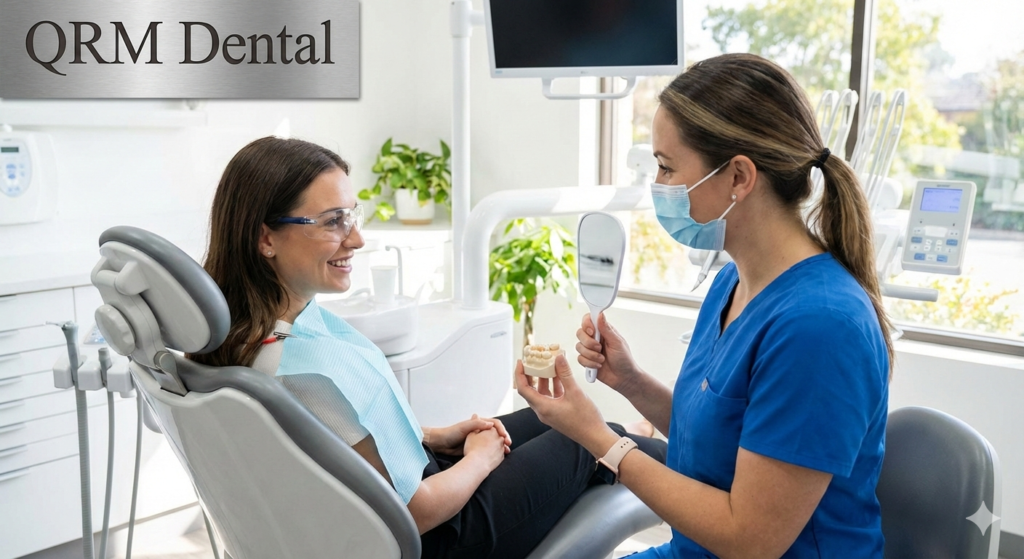
Getting a permanent crown is a common dental procedure, but knowing how to care for it afterward makes all the difference. While your crown is designed for durability, the first few days are critical for ensuring proper bonding and long-term success. Here’s your complete guide to eating safely and resuming normal life after crown placement.
What Happens Immediately After Crown Placement?
Right after your dentist places the crown, you’ll experience some typical sensations. Mild pressure and gumline soreness are normal as the adhesive sets. Your bite may feel slightly different, and the area might be sensitive to temperature changes.
Important first steps:
- Wait until numbness completely fades before eating (usually 1-2 hours)
- Expect mild tightness or sensitivity for 24-48 hours
Avoid testing your bite force while the cement cures
The bonding cement sets quickly but requires time to cure fully—at least 24 hours for optimal strength.
The Critical 24-72 Hour Timeline
First 24 Hours:
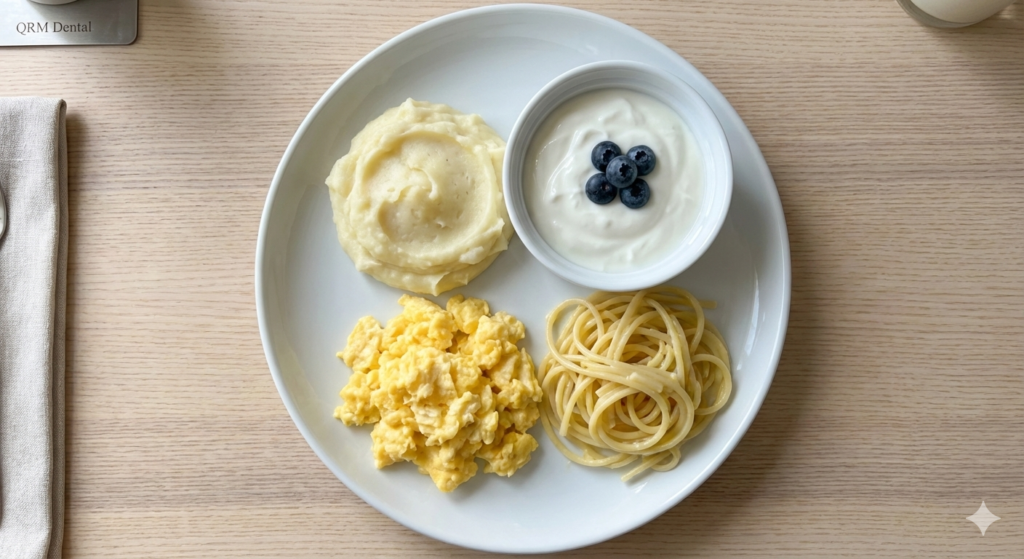
Chew only on the opposite side of your mouth. Stick to soft foods like mashed potatoes, yogurt, scrambled eggs, and room-temperature pasta. Avoid putting any pressure on the new crown.
24-48 Hours:
Begin light chewing with the crown side, but continue favoring softer textures. You can gradually introduce more variety while still avoiding problematic foods.
After 72 Hours
Resume normal eating habits, including most solid foods. Your crown should feel settled and comfortable when chewing.
At QRM Dental, we provide comprehensive crown services right here on our premises. Our experienced team guides you through every step of the process, from initial consultation to post-procedure care, ensuring your crown placement is smooth and successful.
Foods to Temporarily Avoid
Protect your investment by skipping these items during the crucial first 72 hours:
- Hard foods: Nuts, popcorn, raw vegetables, crusty bread
- Sticky items: Chewing gum, caramels, taffy, toffee
- Temperature extremes: Piping hot soups or ice-cold beverages
- Tough proteins: Steak, jerky, or chewy meats
- Crunchy snacks: Chips, pretzels, hard crackers
These foods can dislodge the crown, irritate gum tissue, or compromise the bonding process.
How to Care for Your New Crown
Proper maintenance ensures your crown functions perfectly for years:
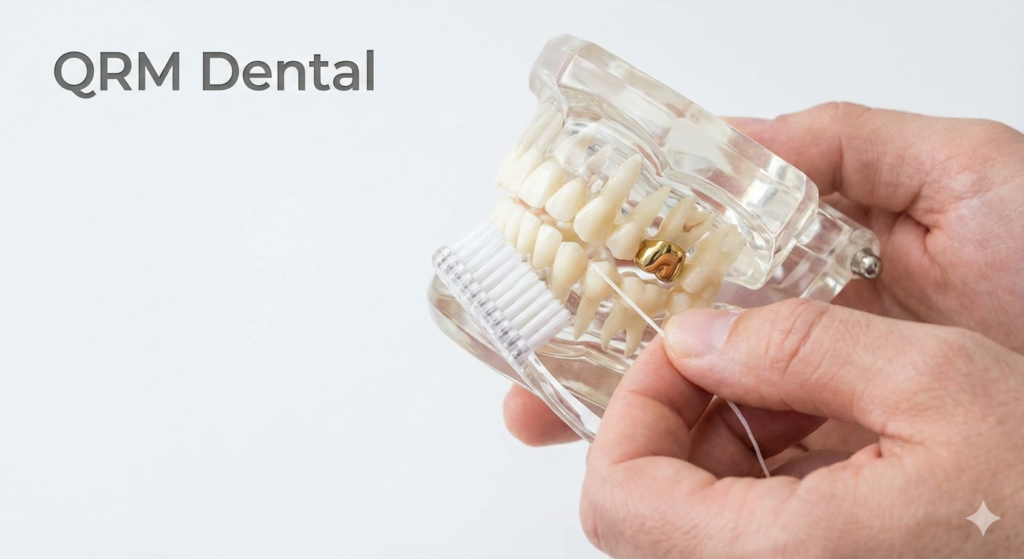
- Brush gently with a soft-bristled toothbrush around the crown area
- Floss daily, sliding the floss out sideways rather than pulling upward
- Distribute chewing pressure evenly across both sides of your mouth
- Consider a nightguard if you grind or clench your teeth
When to Contact Your Dentist
While mild sensitivity is normal, certain symptoms require professional attention:
- Persistent pain when biting or chewing
- A loose or moving crownSwelling, pus, or unpleasant taste
- Crown damage or complete dislodgement
Your crown should feel like a natural extension of your tooth. If the bite feels off after several days, your dentist can make adjustments to ensure proper alignment and comfort.

Ready for expert crown care?
Protecting your new crown starts with the right dental team and clear aftercare guidance. Follow these simple steps, and you’ll enjoy a comfortable, long-lasting restoration that feels completely natural.